
NEWS & UPDATES
 Hope, Walk and Help – Milton Keynes Hope Walk 2026July 20, 2026Our long term friends and supporters, Suri and Harvey, very kindly instigated our very successful first Milton Keynes Hope Walk in memory of their […]
 Patrick smashes it again for Myotubular Trust with ‘The Full Tour’!June 27, 2026Having already completed a half marathon in support of the Myotubular Trust in May, our long-time supporter, Patrick, completed The Tour of Tameside, […]
 London Hope Walk 2026 — A Day of Solidarity, Memory, and HopeJune 17, 2026Our 2026 London Hope Walk was another very special day. Taking place on June 6th, we were honoured to spend it with some of our longest‑standing […]
 More than ‘just a coffee morning’ for GeorgeJune 9, 2026Lili and Josh, whose son, George, has myotubular myopathy, and Lili’s friend, Amy, contacted us to say that they were hosting a coffee morning in […]
 Patrick’s Manchester half marathonJune 3, 2026Patrick became a huge supporter of the Myotubular Trust having been barber to a young boy, Joshua, who had myotubular myopathy. In Patrick’s […]
 10k run in honour of NathanielJune 3, 20262026 marked the year that Nathaniel, who had myotubular myopathy, would have turned 18. In honour of Nathaniel and to mark the milestone, […]
 Joint Research Call with Great Ormond Street Hospital Charity (GOSH) 2026/27May 20, 2026Great Ormond Street Hospital Charity has announced their 2026/27national funding call in child health research. Under this funding call £2.5M is […]
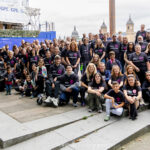 Why not join us in London, Saturday 6th June 2026 for the first of three Hope Walks?April 30, 2026We are delighted to invite you to join us for the first of three Hope Walks in 2026. The first walk takes place on Saturday 6th June, in London. […]
Myotubular Trust Family Conference 2007
Conference Notes
September 2007
V&A Museum, London
Myotubular Trust Conference Family Conferences Notes 2007 in PDF format
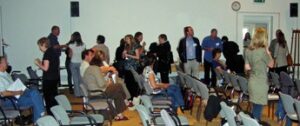
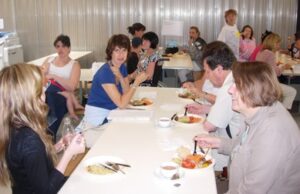
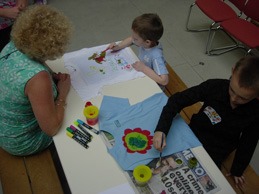
Over seventy parents, academics, doctors, children, physiotherapists, nurses and researchers gathered today for the first Myotubular Trust Family Conference. Topics ranged from cutting edge gene therapy research to the best way to turn on a bubble machine, from molecular diagnostics to how to have a happy tea time.
For parents dealing with myotubular myopathy this mix of high science and practical struggle is very familiar: hoping for a cure for this rare condition while dealing with family life. The conference brought together academics, clinicians and families to share knowledge, experience and hope. As keynote speaker Francesco Muntoni said in his summing up
‘The success of the day shows how much this day is needed. It is the first of many, we hope. We have covered a wide ground…..but that is what is needed with this rare condition’
The morning sessions concentrated on the latest developments in research, drawing experts from all over Europe. All speakers emphasized the wide variation in how the condition presents: some children will struggle from babyhood while a 67 year old grandfather has been identified as having the mutated gene which can lead to MTM. All speakers spoke about the hope in the current areas of investigation and the great need for this research to continue.
‘This is an exciting time, so much is happening and we can really see progress.’ It is crucial that this work continues. Carina Wallgren-Pettersson
The afternoon looked at practical help – with breathing, with playing, with eating. All the speakers talked about the need for each patient with myotubular myopathy to be treated as a whole – a child with a variety of needs, not a collection of isolated symptoms.
‘Always look out for the whole child and be positive about their future’ Hilary Rattue, senior paediatric physiotherapist.
It was a unique opportunity for doctors, researchers, patients and parents to share experiences and hope for the future.
‘I am so glad I came. I am exhausted emotionally and physically but it was worth the long journey I had to get here. I felt so alone before and now I know there is all this. It gives me such hope for my baby’ Mother, Turkey
Conference Papers
Francesco Muntoni opened the conference by praising the work of the Myotubular Trust in bring the conference together and raising funds. He talked about the challenges facing researchers into myotubular myopathy and the great advances which were being made. The causes of the muscle weakness that myotubular myopathy patients experience are starting to be discovered but the full picture is a long way off.
He talked of the issues surrounding myotubular myopathy being made more complicated because of the variable nature of the condition and its rarity. It attracts little funding but more research is crucial.
He talked of the hope of the patients he sees and how even though many may lead short lives, the impact on the world around them can be great. He recommends the book ‘The Time of Her Life’ written by Lesley McIntyre, the mother of a myotubular myopathy child, and published by Jonathan Cape. In it, Lesley writes:
“The end of a great life should be as celebratory as its beginning. Both stages are inevitably linked. It is how a human being engages with the middles bits that reflects who they really are.”
Carina Wallgren-Pettersson gave her paper on ‘Clinical Spectrum and Management’. Like all the speakers, Carina emphasized the wide variation in how the condition presents itself. Even within a family one member may have severe muscle weakness while another, even though affected, may have very mild symptoms. More research is needed to find out why this is.
A common theme throughout all the academic papers was the need for more research into myotubular myopathy and related conditions. Little is known, although papers given at the conference show that more is being discovered day by day:
‘This is an exciting time, so much is happening and we can really see progress. It is crucial that this work continues.’
Carina Wallgren-Pettersson
Carina talked about two new areas of genetic research:
- Dynamin 2 – the first genetic link to be found where a faulty gene is passed on by an affected adult to an affected child
- Amphiphysin 2 – the first gene for a recessive form to be identified – parents are healthy but both have the same gene mutation which they have passed on to their child.
This research is very new – some of it is not yet published. Carina emphasized how important it is that talk of inherited disease and genetic mutation should not make parents feel guilty:
‘We cannot choose our genes. We all give something good to our children too’ Carina Wallgren-Pettersson
In talking about clinical care, Carina talked particularly about breathing problems and how important it is to monitor breathing at least annually, even in patients who can walk and do not seem to have an issue with respiratory care. Breathing may become shallow slowly and so the body may not recognize its lack of oxygen and not produce any symptoms so regular breathing assessments are crucial.
Jocelyn Laporte gave his paper on ‘The causes of diagnoses of centronuclear myopathies’. Centronuclear and Myotubular are both in the same ‘family’ of myopathies his work is directly focused on myotubular myopathy his research; is shedding light on the whole of this area. His paper explained how the pattern of genetic inheritance works with reference to America’s first family ‘The Simpsons’.
Like all the academics Jocelyn was loath to generalize about myotubular myopathy as the symptoms vary so much for person to person but present research seems to indicate that the X linked form of the condition is most severe.
He emphasized that molecular diagnosis is problematic as more than one type of sample may be needed in order to identify a genetic link. Even then, present research shows that for one third of patients the diagnosis of myotubular myopathy cannot be confirmed at a molecular level. This does not mean that the diagnosis is wrong – it means that more research is needed to identify the other genes implicated in myotubular myopathy.
‘We need to bring the patients and the research – we need extensive patient recruitment if we are going to be able to move forward’ Jocelyn Laporte
‘This is a rare condition and it is very difficult to get funding for research. If research is patient funded then we can find out what is most important to them’ Jocelyn Laporte
‘In the last two years we have really moved forward. We now understand the molecular basics. We have a better diagnosis but we need much more research if we are going to be able to help with therapeutic approaches’ Jocelyn Laporte
Anna Buj-Bello gave her paper on ‘Therapeutic approaches to myotubular myopathy’. We cannot reproduce all of her paper here as some of the research she described has yet to be published. However, as soon as we can, we will make her findings available on this website.
Anna’s work is with gene therapy looking at the most efficient ways of delivering DNA to patients affected with myotubular myopathy. Her current approach is that AAD (the technique of introducing altered DNA into the cells of a patient using a viral carrier) will be the most likely method of gene therapy of myotubular myopathy patients. Although still in its pre-clinical stage and which may take some years to come to fruition, her work with affected mice seems hopeful and we look forward to being able to publish her full findings once they have been peer reviewed and published in a scientific journal.
She warns:
‘It usually takes ten years to develop a new drug and for that drug to come to the market but this is a new area and it may be quicker than this.’ Anna Buj-Bello
‘I think there is a light on in this research but we need to find a way to reach the light. There is hope but it won’t be easy. The hope is that in the future there will be a treatment – even if we cannot cure all the muscles then even to cure some would be a great improvement for these patients. I’m optimistic; we’re really starting to understand things from the molecular side’. Anna Buj-Bello
Heinz Jungbluth gave his presentation on ‘Core Myopathies and centronuclear myopathies – what is in common?’ Like many of the academics he emphasized how hard it is to know accurately what the incidence of myotubular myopathy, centronuclear myopathy and other congenital myopathies really is but that many of those are probably under diagnosed, as people with very mild form of the condition may never be picked up, whilst others may present with symptoms but as those conditions are so rare, it may not be properly diagnosed. As centronuclear myopathy is so rare he argues that it is crucial that all researchers share resources.
Heinz presented clinical, muscle biopsy and muscle MRI findings of patients with mutations in the skeletal muscle ryanodine receptor (RYR1) gene, a key player in muscle contraction and commonly involved in other congenital myopathies such as central core disease. Heinz showed how advances in muscle MRI techniques may help with diagnosing MTM and other core and centronuclear myopathies. On MRI scans unaffected muscle shows as black, where as affected muscle shows as white white similar to the appearance of fat. By studying the patterns of the affected muscle it is hoped that greater accuracy in diagnosing muscular conditions will be possible.
At the end of the morning there were a series of questions to the expert panel. See “Morning Questions & Answers” document.
The afternoon sessions looked at practical help and care for people with myotubular myopathy.
‘Respiratory Care’
Anita Simonds gave her paper on Respiratory Care. She emphasized that each person with myotubular myopathy has individual needs and must be assessed and treated differently. All breathing issues must be treated on an individual basis.
Her paper particularly looked at non invasive ventilation (NIV) – when it should start, its uses and how it will help. Although patients and families can be very wary about using mechanized help, her study shows that if NIV is introduced once a drop in a patient’s nighttime absorption of oxygen has been properly identified, it can greatly assist in preventing severe breathing problems. A study into young men with Duchene’s syndrome showed that they felt that using NIV did not negatively affect their quality of life.
Dr Simonds also talked about assisted coughing machines – although again emphasizing that these will help some and not all myotubular myopathy patients – she reported great success in helping some patients to breathe. Dr Simonds also talked about using NIV to help to develop the chest cavity to avoid the ‘scooped’ appeared than many myotubular myopathy patients develop.
At the end of the session there were a series of questions on breathing. See ‘Breathing Questions & Answers’ document.
‘Feeding & The Psychology of Feeding’ Speech & Language
Parents told Annie Aloysius and Dr Rosie Hurlston that feeding can be ‘a nightmare’. In their presentations they emphasized that feeding and swallowing must be tackled on a individual basis with a full case history:
‘They may have a common diagnosis but every child or family is different’ Annie Aloysius
Annie Aloysius said that developments in video-fluoroscopy , which can give an accurate picture of how how swallowing works in a patient, now mean that problems in swallowing and feeding can be better identified. Parents experiencing feeding problems should ask their medical team to refer them for a swallowing assesment.
Dr Rosie Hurlston said that children can be good at recognising what they can and can’t cope with. Often she has found that a child has been labeled fussy but actually they are just doing what is right for them – avoiding food that they find hard to eat. Dr Hurlston said if possible parents should try to take the negative feelings out of feeding:
‘You need a playful solution to a serious problem – children learn to deal with their problems through play. Parents should use praise and encouragement as much as they can – nothing has to be perfect.’ Rosie Hurlston
Physiotherapists Hilary Rattue and Sarah Protheroe did not have time to give their full presentations but have said they are happy to answer questions by email should any parents have questions. Hilary said her key message to parents was:
‘Know your child’s chest! Lots of things can affect a child’s breathing .’ Hilary Rattue
‘Always look out for the whole child and be positive about their future’ Hilary Rattue
Parents then had an opportunity to ask questions to the physios see ‘Physiotherapy Questions & Answers’ document.
Closing remarks by Prof Francesco Muntoni:
The day’s success shows how much it was needed. We have covered a wide ground but we are dealing with a wide clinical spectrum so it is very hard to give a blanket approach.
Don’t be afraid to go back to your medical team and ask questions. If you don’t understand what you are being told, ask again! Do engage with professionals as much as you can. As parents you can really help your children by making sure you know and understand as much as you can – and you can help your doctors to understand too.
Today’s research papers show how much is going on to find the causes and cures for this condition. Jocelyn’s research into identifying the new genes involved in the family of disorders which include myotubular myopathy, Anna Buj-Bello’s work about animal models in gene therapy research; Heinz presentation shows us how MRI tests on muscles can be a good diagnostic tool and this is also very good news.
In additional to all the things we have heard about today there is also stem cell research happening in the US and other work in Japan.
This is an exciting time for research and there is a lot of good work being done. I am so grateful to the organizers of today’s event for providing an opportunity for us all to see so much.
Myotubular Trust would like to thank all the family conference guest speakers for their contributions.
Sincere thanks to Eleanor Garland for kindly taking these notes.