
NEWS & UPDATES
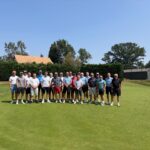 20th Annual Golf Tournament, In Memory of JackOctober 6, 2026Supporters of the Myotubular Trust since the day it was founded, our dear friends Karen and Dave have recently hosted the 20th Jack Blunsdon Golf […]
 Every Step Brings Hope: Highlights from Liverpool’s Epic 10K WalkSeptember 20, 2026The second Liverpool Hope Walk took place on a sunny and warm September morning and what a crowd it attracted. 157 people were registered and we […]
 Hope, Walk and Help – Milton Keynes Hope Walk 2026July 20, 2026Our long term friends and supporters, Suri and Harvey, very kindly instigated our very successful first Milton Keynes Hope Walk in memory of their […]
 Patrick smashes it again for Myotubular Trust with ‘The Full Tour’!June 27, 2026Having already completed a half marathon in support of the Myotubular Trust in May, our long-time supporter, Patrick, completed The Tour of Tameside, […]
 London Hope Walk 2026 — A Day of Solidarity, Memory, and HopeJune 17, 2026Our 2026 London Hope Walk was another very special day. Taking place on June 6th, we were honoured to spend it with some of our longest‑standing […]
 More than ‘just a coffee morning’ for GeorgeJune 9, 2026Lili and Josh, whose son, George, has myotubular myopathy, and Lili’s friend, Amy, contacted us to say that they were hosting a coffee morning in […]
 Patrick’s Manchester half marathonJune 3, 2026Patrick became a huge supporter of the Myotubular Trust having been barber to a young boy, Joshua, who had myotubular myopathy. In Patrick’s […]
 10k run in honour of NathanielJune 3, 20262026 marked the year that Nathaniel, who had myotubular myopathy, would have turned 18. In honour of Nathaniel and to mark the milestone, […]
Managing the Conditions
Professor Heinz Jungbluth
*Reference: Congenital myopathies: disorders of excitation–contraction coupling and muscle contraction, Jungbluth et al (2018)

Care Standards
Publications
Standards of care for congenital myopathy A publication for healthcare practitioners by an international collaboration of researchers sharing best practice on standards of care in congenital myopathy (2012. Updated 2018).
The Care of Congenital Myopathies – a Guide for Families A patient friendly version of the ‘Standards of care for congenital myopathy’, this guide covers all aspects of living with a congenital (born with) myopathy, but also includes information about nutrition, exercise, transition to adulthood, amongst other topics. It has been written by an international group of parents and researchers, including some parents of children with myotubular and centronuclear myopathies. (Updated 2021). This guide is available in English and other languages.
Respiratory care
It is not unusual for people with myotubular and centronuclear myopathies to experience breathing problems. Mostly all children who present with symptoms of severe muscle weakness from birth will require support with their breathing for some hours of the day and/or night.
There are two ways that ventilation can be delivered, depending on how much support is needed:
- Invasive ventilation is when breathing support is delivered via a tracheostomy – a small incision by surgical procedure into the windpipe.
- Non-invasive ventilation is when breathing support is delivered via a nose or face mask.
Getting on top of breathing problems can really help to improve quality of life. It is especially important that children and young people have a good multidisciplinary team regularly involved in their breathing care, especially to help through periods of rapid growth or changes in physical ability. Older children and adults who have not previously needed breathing support are advised to be aware of the signs of poor breathing function. They will also need access to modern equipment to help them manage good airways clearance and maintain good breathing support.
Publications
Airways clearance techniques in neuromuscular disorders: a state of the art review (full version). This very welcome and long awaited resource is an international review of the best evidence available on airway clearance techniques in neuromuscular disorders. Written by a group of 21 international experts in this field, it is all encompassing in its review, from published research to patient case studies. (Open access sponsored by Myotubular Trust).
British Thoracic Society Guidelines for respiratory management of children with neuromuscular weakness (full version) Guidance written by members of the British Thoracic Society – respiratory consultants from all over the UK –
on best practice respiratory support advice to healthcare practitioners looking after children with neuromuscular conditions. (2012)
Guidance on breathing and non-invasive ventilation (NIV) for children from the age of two years old living with a neuromuscular condition This is a patient-friendly guide on non-invasive ventilation advice within the ‘British Thoracic Society Guidelines for respiratory management of children with neuromuscular weakness’. An NHS SWNODN publication, endorsed by NIHR Respiratory Biomedical Research Unit, Royal Brompton Hospital London. (Reviewed 2017)
Developing best practice guidelines for management of mouthpiece ventilation in neuromuscular disorders. 252nd ENMC international workshop (2020) written by an international group of respiratory professionals and patient organisations (including Myotubular Trust) to provide practical information and tools to help respiratory practitioners with their greater understanding for, and the successful delivery of mouthpiece ventilation to patients with neuromuscular conditions.
Outcome of goal-directed non-invasive ventilation and mechanical insufflation/exsufflation in spinal muscular atrophy type This paper evidences use of positive pressure non-invasive ventilation (NIPPV) and cough assist (M-IE) in a cohort of children with SMA1 (spinal muscular atrophy type 1) to facilitate a transfer home. SMA1 presents similarly to x-linked myotubular myopathy (XLMTM) however, XLMTM is non progressive so there are differences in expected outcomes. (2010)
Long Term Non-Invasive Ventilation in Children: Impact on Survival and Transition to Adult Care A paper by respiratory experts at the Royal Brompton Hospital in London on long term non-invasive ventilation in children moving to adulthood. (2015)
Other resources
 MYOTUBULAR MYOPATHY Facebook Group (A private social media support group for anyone affected by myotubular and centronuclear myopathy)
Chronic Ventilator Roadmap, is a useful reference tool to help parents of children who are long-term ventilated in their transition from hospital to home. You can find the roadmap within this publication, and how A Standardized Discharge Process Decreases Length of Stay for Ventilator-Dependent Children Baker et al (2015)
A short film
Getting your New Baby Home From Hospital – A Royal Brompton Hospital, London film about the transition from hospital to home, In this short film three families, including the parents of Baby Elijah who has myotubular myopathy, talk about the Long Term Ventilation team helped them to be able to get their baby home from hospital safely, smoothly and within a matter of months.
Nutrition – blended feeding
The accepted standard feed for patients is still liquid, nutritionally complete, pre-prepared commercial feed which is sterile, standardised and easy to prepare and administer.
However, there is currently increasing interest in the use of liquidised food (blended/ pureed, ‘table food’), both in addition to and as a replacement for commercial feeds. There are anecdotal reports of benefit, and little evidence of harm. However, there is at present little robust research evidence to support this practice, so as yet it cannot be formally recommended.
A UK website about blended diet written by a grandmother to support parents and carers, with lots of personal but helpful advice for other families who are thinking about starting their child on real food.
Another recent publication explores paediatric dietitians’ perceptions and experiences of blended tube feeding use – Dietitians’ perceptions and experience of blenderised feeds for paediatric tube feeding.
Other recommended reading regarding home blended feeding includes two books entitled Complete Tubefeeding: Everything you need to know about tubefeeding, tube nutrition, and blended diets which has been written by Eric Aadhaar O’Gorman (2011) who is himself tube fed and is very informative and helpful. Homemade Blended Formula Handbook Paperback written by Marsha Dunn Klein and Suzanne Evans Morris (2017).
Anyone wishing to opt for a blended liquid food diet via their enteral feeding tube should ask to have an individualised enteral feeding risk assessment carried out by their local NHS dietician to enable them to make an informed choice that is personalised to the individual.
Scoliosis care
Scoliosis (derived from the Greek word meaning crooked) is a medical condition in which a person’s spine is curved from side to side. Although it is a complex three-dimensional deformity, on an X-ray, viewed from the rear, the spine of an individual with scoliosis may look more like an “S” or a “C” than a straight line.

Scoliosis is typically classified as either congenital (caused by vertebral anomalies present at birth), idiopathic (cause unknown, subclassified as infantile, juvenile, adolescent, or adult, according to when onset occurred), or neuromuscular (having developed as a secondary symptom of another condition, such as myotubular and centronuclear myopathy).
About 3 out of every 100 people have some form of scoliosis, though for many people it’s not much of a problem. For a small number of people, and sometimes children and young adults with neuromuscular conditions in particular, the curve gets worse as they grow and they may need an operation to correct it. While small curves generally do not cause problems and may not be very noticeable to others, larger curves can cause discomfort and lead to respiratory problems when the lungs become compressed.
Respiratory Care Advice for Scoliosis (PDF) Information taken from the British Thoracic Guidelines around peri-operative and scoliosis respiratory care. Or see British Thoracic Society Guidelines for respiratory management of children with neuromuscular weakness (full version) for an in-depth section on scoliosis and peri-operative management. (2012)
Frequently asked questions and answers about Scoliosis(PDF) This Q&A is from the web presentation (see below) and includes a glossary of terms. (2011)
Web presentations on Scoliosis and Respiratory Management
In 2011, Myotubular Trust joined up with USA patient organisations Joshua Frase Foundation and Cure CMD to arrange two web presentations (webinars) – one is on Scoliosis and one on Respiratory Management, to help inform patients and families with myotubular and centronuclear myopathy and congenital dystrophies.
Part 1: Pediatric Pulmonologist Hemant Sawnani, M.D., Cincinnati Children’s Hospital Medical Center: How we breathe and what goes wrong in congenital muscle disease?
Part 2: Professor Anita Simonds, Royal Brompton Hospital, London: Respiratory issues in congenital muscle disease and what we can do about them
Part 3: Dr Michelle Chatwin, Royal Brompton Hospital, London: Secretion Management Techniques
Liver involvement and management
Some (but not all) people with MTM and CNM have occasionally experienced abnormal liver function blood test results. Very rarely there are more severe liver related complications. We have provided liver recommendations here in the form of a downloadable PDF leaflet that you can give to your medical teams – click here to open up the file: One Page Liver Summary, Sept 2023. There are some other resources which might also be helpful to you. Firstly, we are now collecting data from patients about liver involvement to better understand the liver in myotubular and centronuclear myopathy, to help with the day-to-day care of people with the conditions, and to improve future research and treatment development. If you wish to contribute your experiences – whether you are affected by liver issues or not – we would love you to join us. Please read more about our Patient Registry and how you can contribute to our understanding.
Watch, read and find out more..
You can watch the 2023 Liver Webinar on YouTube, which provides more information about potential liver involvement in MTM/CNM, as well as the MTM/CNM Patient Registry. Also feel free to download Q&A for the Liver Webinar here: Liver Webinar Q&A FINAL July 2023.
Mental Health and Wellbeing
It is widely recognised that long-term illness and bereavement can have a serious psychosocial impact on affected individuals and families. Managing a condition like the myotubular and centronuclear myopathies, and the consequences it poses are so easily the trigger for a number of mental health problems including heightened stress, anxiety, low mood and depression, PTSD to name a few. In 2020-21, our affected families and individuals also had to deal with a pandemic and additional overwhelming challenges such as ‘shielding’. To help our community with mental health and wellbeing, we facilitated a ‘Coping Through Covid & Beyond‘ webinar which was delivered by the inspiring Dr Christianna Kyriacou, Counselling Psychologist who is based at the Royal Brompton. Dr Kyriacou was able to share the latest thinking on wellbeing and provide mindfulness tools and techniques to help our patients and their families along with signposting to help access psychological medicine.
The webinar is supported by a factsheet which can be found here, which details various types of resources for psychological support including where to access urgent help. It includes information on accessing one to one therapy, where to access information leaflets for specific mental health conditions, mental health charities, help lines and useful websites, free online therapy resources, mobile phone applications, self-help books and where to access private therapy. Most of the resources listed are free.
Other resources
There are a number of other UK based organisations which provide advice and factsheets on living with a disability. The following resources provide advice on emotional support, financial matters, grants, housing and equipment. If you need friendship, information or advice, please always feel free to get in touch with us at contact@myotubulartrust.org and we can help.
Together For Short Lives Factsheets
Living Made Easy (part of the Disabled Living Foundation)
Muscular Dystrophy UK Factsheets
Newlife Charity Equipment loans, grant funding and free sensory toy loans