
NEWS & UPDATES
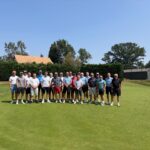 20th Annual Golf Tournament, In Memory of JackOctober 6, 2026Supporters of the Myotubular Trust since the day it was founded, our dear friends Karen and Dave have recently hosted the 20th Jack Blunsdon Golf […]
 Every Step Brings Hope: Highlights from Liverpool’s Epic 10K WalkSeptember 20, 2026The second Liverpool Hope Walk took place on a sunny and warm September morning and what a crowd it attracted. 157 people were registered and we […]
 Hope, Walk and Help – Milton Keynes Hope Walk 2026July 20, 2026Our long term friends and supporters, Suri and Harvey, very kindly instigated our very successful first Milton Keynes Hope Walk in memory of their […]
 Patrick smashes it again for Myotubular Trust with ‘The Full Tour’!June 27, 2026Having already completed a half marathon in support of the Myotubular Trust in May, our long-time supporter, Patrick, completed The Tour of Tameside, […]
 London Hope Walk 2026 — A Day of Solidarity, Memory, and HopeJune 17, 2026Our 2026 London Hope Walk was another very special day. Taking place on June 6th, we were honoured to spend it with some of our longest‑standing […]
 More than ‘just a coffee morning’ for GeorgeJune 9, 2026Lili and Josh, whose son, George, has myotubular myopathy, and Lili’s friend, Amy, contacted us to say that they were hosting a coffee morning in […]
 Patrick’s Manchester half marathonJune 3, 2026Patrick became a huge supporter of the Myotubular Trust having been barber to a young boy, Joshua, who had myotubular myopathy. In Patrick’s […]
 10k run in honour of NathanielJune 3, 20262026 marked the year that Nathaniel, who had myotubular myopathy, would have turned 18. In honour of Nathaniel and to mark the milestone, […]
Getting a Diagnosis
Advice on Genetics and Counselling

Professor Heinz Jungbluth MD PhD MRCP MRCPCH
Professor and Consultant in Paediatric Neurology Evelina Children's Hospital, Guy's and St Thomas' NHS Foundation Trust, London.
Professor Heinz Jungbluth, who was involved in discovering some of the genes implicated in centronuclear myopathy advises the following:
“Achieving a precise genetic diagnosis is the ultimate aim of our assessment. However, a careful review of clinical findings remains extremely important to inform the choice of testing, which for some genes is still very laborious even with the most sophisticated techniques currently available. It is therefore important that prior to genetic testing the child is referred either by their local Consultant Paediatrician or Paediatric Neurologist, and assessed at a tertiary neuromuscular centre with an expertise in centronuclear and other congenital myopathies.
 In addition, one or more further genes that cause centronuclear myopathy have yet to be identified – not everyone affected by the condition has a change in one of the genes we can currently test for. However it is still important that patients with an unconfirmed genetic mutation are known to us, and therefore hopefully involved in future clinical studies to help identify other, even rarer genes associated with MTM/CNM.”
For more general information on the genes which have already been identified in centronuclear myopathy, please read Professor Heinz Jungbluth’s overview of MTM/CNM.
You can also scroll down this page to listen to some of the Genomics England’s series of short podcasts which explain in detail about variants of unknown significance; explaining the difference between genetics and genomes; explaining what a genome and explaining whole genome sequencing. More short videos on genomics can be found here, on the Genomics England YouTube channel.
What is genetic testing?
Genetic testing involves taking a blood sample from an affected patient and sending it to a laboratory where the DNA is extracted and then tested to identify any changes or variants. Because there is an overlap in symptoms common to different muscle diseases, patients are tested for changes in their DNA sequence for a range of genes – called a ‘gene panel’. For example, the MTM1 gene is found on several NHS gene panels in the NHS genomics test directory (R81, R82, R83, R14 and R21) alongside other genes that could cause myopathy. These panels are updated regularly as new associations are made between a gene and its phenotype (symptoms and signs).
Scientists and bioinformaticians are able to look at every nucleotide (the basic building blocks of DNA) in every gene for all the genes on the panel being tested. The MTM1 or other CNM gene code is checked for a change or variation from the reference gene code that we would expect. Not all changes or variants in genes cause symptoms. Each change is assessed using a points of evidence system. Variants that are likely to impair/affect the function of the gene and cause a myopathy are called pathogenic or likely pathogenic variants and are reported back to the referring clinician. Variants that are unlikely to impair/affect the function of the gene are considered benign or likely benign and are not reported back. For some variants the assessment does not provide enough evidence to classify them as either pathogenic or benign. These variants are referred to as “variants of uncertain significance” (VUS). With time or by further investigations it may be possible to re-classify these variants as benign or pathogenic.
Genetic testing in the UK
Genetic testing is free to people eligible for NHS treatment in the UK. Genetic testing for variants in the MTM1 gene is available via a referral from a Clinical Geneticist or Neurologist.
They can request the most appropriate panel for you based on your symptoms:
- R81 Congenital myopathy panel at the Synnovis DNA Laboratory, Guy’s Hospital, London
- R82 Limb girdle muscular dystrophies, myofibrillar myopathies and distal myopathies panel at Newcastle Genetics Laboratory.
-
R69 Hypotonic Infant, at the North Thames Genomic Laboratory Hub, Queen Square, London
For newborn babies who present with symptoms that could be caused by a genetic condition, Rapid Whole Genome Sequencing can be requested by a Clinical Geneticist in collaboration with a Neonatal Consultant. Rapid Whole Genome Sequencing is carried out at the Exeter Regional Genetics Laboratory and can usually report back within 2 – 3 weeks.
When a neuromuscular condition such as a myopathy is suspected in a fetus following an ultrasound, Whole Exome Sequencing (R21 “Fetal anomalies with a likely genetic cause” gene panel) can be requested by a Clinical Geneticist. Testing requires invasive prenatal sampling (chorionic villus from the placenta or amniotic fluid) and samples are tested at either at the Central and South Genomic Laboratory Hub or at the North Thames Genomic Laboratory Hub.
For both of these Whole Genome or Whole Exome testing, including samples for testing of both parents is preferred, alongside the sample of the affected child.This is called trio testing.
The R81 and R82 panels (see above) form part of an NHS commissioned highly specialised service (HSS) which provide testing to a small number of patients at hospitals in which expert clinicians offer an integrated clinical and diagnostic advisory service.
R81 testing is led by Professor Francesco Muntoni at the Dubowitz Neuromuscular Centre, Great Ormond Street Children’s Hospital, and the neuromuscular team lead by Professor Heinz Jungbluth at the Evelina Children’s Hospital, London.
R82 testing is led by Dr Chiara Marini Bettolo at the John Walton Muscular Dystrophy Research Centre, Newcastle-upon-Tyne.
Genetic Counselling
Always ask your GP for a referral to your Regional Genetics Service for advice and guidance. You can ask for this referral at any point – whether your immediate or extended family has had a genetic diagnosis of myotubular myopathy / centronuclear myopathy recently, or in the past. You are always welcome to email the Myotubular Trust at contact@myotubulartrust.org if you need any support to obtain a genetics referral.
Acknowledgements: With sincere thanks for their help in writing this to Dr Meriel McEntagart, Consultant Clinical Geneticist, St. George’s Hospital, London and Dr Jo McCauley, Clinical Scientist, Synnovis Ltd [Last updated November 2025]
Understanding Genomics : A Series of Podcasts
Genomics England have produced some interesting podcasts to help explain genomics in rare disease. This first podcast talks about ‘variants of unknown significance’ and previous podcasts are included and provided below (courtesy of Genomics England www.genomicsengland.co.uk):
April 2023 – explaining the difference between genetics and genomes
May 2023 – explaining what a genome is
June 2023 – explaining whole genome sequencing
May 2024 – Are genetic conditions always inherited from parents?