
NEWS & UPDATES
 Hope, Walk and Help – Milton Keynes Hope Walk 2026July 20, 2026Our long term friends and supporters, Suri and Harvey, very kindly instigated our very successful first Milton Keynes Hope Walk in memory of their […]
 Patrick smashes it again for Myotubular Trust with ‘The Full Tour’!June 27, 2026Having already completed a half marathon in support of the Myotubular Trust in May, our long-time supporter, Patrick, completed The Tour of Tameside, […]
 London Hope Walk 2026 — A Day of Solidarity, Memory, and HopeJune 17, 2026Our 2026 London Hope Walk was another very special day. Taking place on June 6th, we were honoured to spend it with some of our longest‑standing […]
 More than ‘just a coffee morning’ for GeorgeJune 9, 2026Lili and Josh, whose son, George, has myotubular myopathy, and Lili’s friend, Amy, contacted us to say that they were hosting a coffee morning in […]
 Patrick’s Manchester half marathonJune 3, 2026Patrick became a huge supporter of the Myotubular Trust having been barber to a young boy, Joshua, who had myotubular myopathy. In Patrick’s […]
 10k run in honour of NathanielJune 3, 20262026 marked the year that Nathaniel, who had myotubular myopathy, would have turned 18. In honour of Nathaniel and to mark the milestone, […]
 Joint Research Call with Great Ormond Street Hospital Charity (GOSH) 2026/27May 20, 2026Great Ormond Street Hospital Charity has announced their 2026/27national funding call in child health research. Under this funding call £2.5M is […]
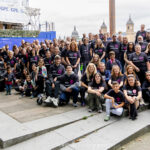 Why not join us in London, Saturday 6th June 2026 for the first of three Hope Walks?April 30, 2026We are delighted to invite you to join us for the first of three Hope Walks in 2026. The first walk takes place on Saturday 6th June, in London. […]
Myotubular Trust Family Conference 2007
Morning Questions & Answers
Expert Panel:
Professor Francesco Muntoni (FM)
Dr Jocelyn Laporte (JL)
Dr Heinz Jungbluth (HJ)
Professor Carina Wallgren-Pettersson (CWP)
Dr Anna Buj-Bello (ABB)
Anne Lennox (AL)
Morning Questions & Answers in PDF format
Q I’m inspired by what I heard today but when I go back to my own medical team I feel I am going back centuries – how do we get increased coordination so that the knowledge and expertise we heard to day can be better coordinated to spread out to others?
FM – There is a network of Paediatricians and Paediatric neurologists who meet regularly as part of the Muscle Interest Group so there are venues for your doctor to discuss specific issues with a group of neuromuscular experts if you ask him/her to do so.
In addition there is also the possibility for your child to be seen directly in the Hammermsith Centre (UK), if required, as this centre has been Nationally Commissioned to provide expert opinion on children with congenital muscular dystrophies and congenital myopathies. The centre can receive muscle samples from external sources; DNA samples to help to arrive to a final diagnosis (bearing in mind that the service only started this year for the congenital myopathies, so we are getting organized as far as the analysis of some of these genes is concerned). If a clinical opinion is necessary, The Centre can also assess children, although the travel to the Hammersmith, with the long journey depending on where you live, should be balanced taken into the pros and cons analysis.
Q What about US/Europe collaboration?
JL – there is peer usage of data
Q What about a central registry of patients?
AL – The MTT is starting up a patients registry to European academic standards to help the academic community access and coordinate their approach to patients. Also the Myotubular Trust is developing a database of research which you can take to your Doctors and medical team. This should be available from December 2007 on the website.
As parents/patients you have to try to educate your doctors not to be afraid of centers of excellence. Keep badgering your medical team until you get the help you need.
Q As a physio I want to know, how can we get information to the coalface workers so that children are not exposed to inappropriate testing? We need to get muscle conditions identified early so that preventative treatment can be applied as soon as possible
FM – It can be frustrating but it is hard for doctors as they may never have seen this condition before – it is very, very rare. There is a new culture of openness in the NHS with doctors trying to be honest when they cannot make a diagnosis. My plea to parents would be that if you do not have a diagnosis which makes sense to you – push for a referral or a second opinion until you get one that does make sense to you. Ask for a presentation of the problem of your child at the national forum and ask for a feedback.
Q If a sister of a mother who has an affected child has taken a genetic screening test and that test is negative – how reliable is the result?
FM – If a gene mutation has been found then carrier testing is very reliable. If a mutation hasn’t been identified then it is much more complicated. The regional clinical genetic centre will be able to help
Q I have been told that specific therapies are dependent on molecular diagnosis – what does this mean?
FM – We need to know which gene has mutated in order to treat it. There is some experience is treating some conditions (eg Duchenne’s) where is the mutation is known, then it is easier to target the treatment.
Q What if molecular tests are negative?
HJ – This underlines the point that the genetic basis for this condition is not yet completely resolved – recent findings suggest that a substantial proportion of cases do not have a change in any of the genes identified to date and that additional genes not yet identified are likely to play a role in centronuclear myopathy as well. At Guy’s and St Thomas Hospital we have recently been awarded a grant to establish diagnostic genetic screening for the major congenital myopathy genes (including those implicated in centronuclear myopathy) to complement our clinical neuromuscular service; this will help to identify patients with centronuclear myopathy without mutations in any of the currently known genes for further investigation.
JL – Researchers are searching for additional implicated genes that are not yet identified. This is our case in Strasbourg and it is very important for this work to be able to collect DNA from patients negative for the known genes. Patients/families could speed up the process by 1)participating to the establishment of the patients database, 2)participating to enrollment in research projects, 3) asking their clinician/geneticist to send DNA to research labs for their research projects : for example our lab in Strasbourg (jocelyn@igbmc.u-strasbg.fr), or the lab of A Beggs in USA (http://www.tch-genomics.org/research/beggs/participating.html). Large families with several affected are especially suited for this kind of research, but sporadic cases could be helpful too.
Q In Holland MTT is on a ‘black list’. Affected babies will not be treated and allowed to die. Is there anyone in Holland who might be able to help?
CWP – Myotubular Myopathy (MTM) should not be on any ‘black list’ because of the diagnosis alone as the symptoms are so variable and a many have a high quality of life. There was a Professor Peter Barth who worked on MTM in Holland but he was retired. I will look for a contact in Holland.
JL – It is important that people realize that just because a gene mutation is found the effects of the disease may still be so mild that the person is not aware of it. As part of our testing in France we found a 67 year old grandfather who had the genetic mutation so the diagnosis on its own is no reasons not to treat.
FM – The standard for clinicians is not clear. Maybe we should try to make understanding better within medical community.
Addendum May 2008: relating to newly published paper entitled:
Buj-Bello A, Fougerousse F, Schwab Y, Messaddeq N, Spehner D, Pierson C R, Durand M, Kretz C, Danos O, Douar AM, Beggs A, Schultz P,Montus M, Denèfle P, Mandel JL
AAV-mediated intramuscular delivery of myotubularin corrects the myotubular myopathy phenotype in targeted murine muscle and suggests a function in plasma membrane homeostasis.
Journal: Human molecular genetics, 2008 Apr 22; [Epub ahead of print]
Q. 10 years is a long time before treatment is made available how can this time be reduced?
ABB – It is very difficult to predict, since it is important to prove the efficiency and safety of this treatment in animals models before trying anything in humans. We are not there yet but are doing our best with the means we have.
Q. Will this form of treatment also help the bolus and respiratory muscles, or is there only currently a way of treating muscles in the limbs?
ABB – We are using the intramuscular approach for the moment. It means that only one muscle is treated. To help the bolus and respiratory muscles it will be necessary to use a systemic approach (not performed yet).
Q. Has the treatment “worn off” in the mice that you have tested, or do they need repeated treatments to remain strong?
ABB – We have studied the effect 4 to 6 weeks after the injection taking into account that animals have a generalized myopathy affecting all muscles. However, the treatment will probably stay for months as, in other animals, AAV-mediated gene transfer has been shown to last at least 30 months.