By Zak Hughes
As the landscape of clinical trials in MTM/CNM grows in momentum and scope, it is incredibly important to understand exactly what a clinical trial can entail and take this knowledge forward into the planning stages of any future trials. Biomedical companies spend a lot of time and effort on building trial protocols that account for medical and statistical considerations, but have historically been less-than-perfect in properly analysing the practical and logistical realities of a clinical trial for the patient participants themselves; this can be especially problematic for conditions such as MTM/CNM, which can have unique interactions with aspects such as fatigue and physical accessibility in clinical trial spaces.
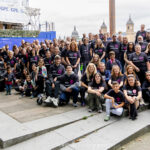
In the wake of the concluded DYN-101 and ASPIRO trials, Nicol Voermans and Lizan Stinissen of Radboud University Medical Center – along with members of ZNM-Zusammen Stark, MTM-CNM Family Connection and the Myotubular Trust, and members of the MTM/CNM-affiliated academic community – published a paper exploring and summarising feedback gathered from patients and families from the MTM/CNM community who have participated in, or considered participating in, past and future clinical trials and other studies. As the paper outlines, this research was carried out as a series of group interviews run by Radboud University– organised alongside ZNM-Zusammen Stark, MTM-CNM Family Connection and the Myotubular Trust. Each group interview involved a series of questions posed to all members of the group, as well as opportunity for open discussion, and the perspectives of both patients and family members were heard and recorded.
My personal involvement in this study was as both co-organiser and study participant– I think it’s worth noting that during the study I felt able to share my perspective as a person living with XLMTM and that what I shared was reflected in the final research. As a previous clinical trial participant, it’s been really encouraging to see this research being done so early in this new clinical trial phase of MTM/CNM– and whilst it wasn’t able to influence the first wave of clinical trials, I’m hopeful that it can be a valuable tool for planning the next wave – and beyond – of trials and studies, with the practical needs and preferences of patient participants put squarely in the focus.
The full report can be found here:
Or read on for more information:
Lessons learned from clinical studies in centronuclear myopathies: The patient perspective – a qualitative study
Who carried out this research?
This research was a collaborative study carried out by academic researchers and the patient organisations ZNM-Zusammen Stark! (in Germany), MTM-CNM Family Connection (in the US) and Myotubular Trust (in the UK).
Why was this research carried out?
Over the last decade, several clinical studies focusing on centronuclear myopathies (CNM) have been carried out. Some of these studies involved collecting data to better understand the natural history of CNM diseases, and some were clinical trials testing experimental treatments or drugs. This research has given insights into patients’ experiences of these studies. These learnings are important for being able to plan future studies that fit better with patients’ lives.
What did the researchers do?
The researchers held focus groups with adults with centronuclear myopathy who had participated in a recent clinical study, or studies. They also included parents/caregivers of study participants; and representatives from patient organisations either involved in the preparation or communication of recent clinical studies, or who had followed the studies closely. This resulted in four focus groups (group interviews) with 37 participants in total. These focus groups were held at the 2022 Family conference of ZNM-Zusammen Stark!, and online via Teams with the Myotubular Trust (September 2022) and with the MTM-CNM Family Connection (January 2023).
The researchers asked each focus group several questions about expectations and preparation for the clinical study, experience of the study, communication, and recommendations for the future.
What did they find out?
The researchers found that the focus group participants were realistic in their expectations of the clinical study, hoping for small improvements in function and quality of life. Participating in a clinical study had a great impact on many aspects of daily life for both patients and their families, including school and work. The focus group participants highlighted the importance of clear and timely communication while in a clinical study, particularly if severe side-effects had been observed in patients.
Several recommendations were made for future clinical studies, for example:
- Clinical teams should plan appointments that fit the patient’s care schedule as closely as possible.
- Companies sponsoring the studies should offer a service for emotional support both during, but just as importantly, after the trial has ended.
- Patients who are considering participating in a clinical study should be aware of the large impact the study could have on their daily lives, as well as possible financial costs.
- Patient organisations can play an important part in managing the balance of expectations and help to communicate the message that ‘a trial is not a treatment’.
In summary, this research emphasises the importance of involving patients, caregivers, and patient communities in the design, development, and evaluation of clinical studies and trials. Clinical study and trial evaluation should not only include physical or medical outcomes, but also learnings from the clinical study experience of patients and families that can be used to improve future studies. Furthermore, it is a nice illustration of co-creation of clinical research by academic researchers and patient organisations worldwide.